
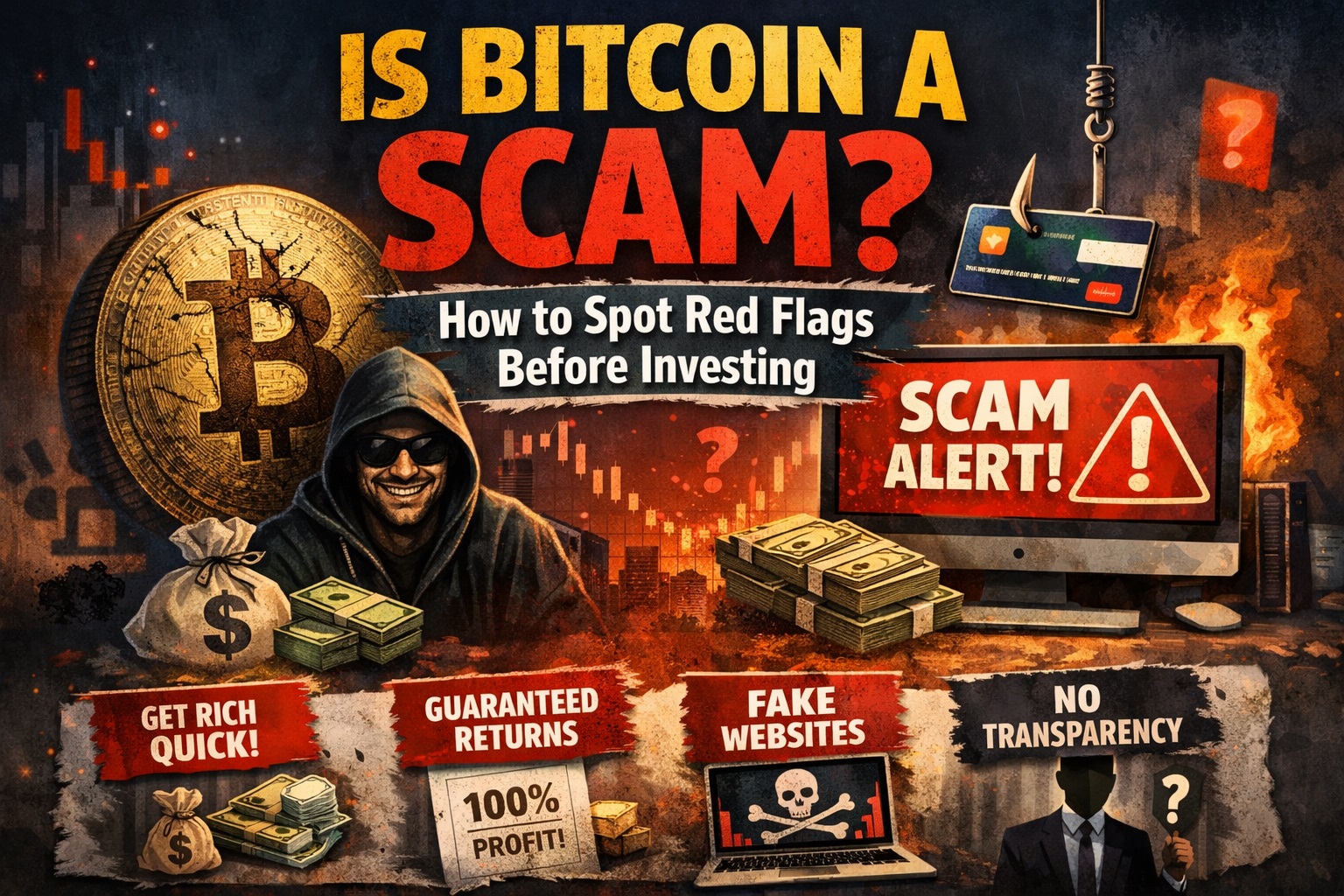
Bitcoin has made millionaires – and it has also been used to rob ordinary people of their life savings. With cryptocurrency dominating financial headlines and social media feeds, it can be genuinely difficult to tell a legitimate opportunity from a dangerous trap. Before you put a single dollar into any crypto investment, there are things you need to know.
Is Bitcoin a Scam or Real?
This is one of the most searched questions in personal finance right now, and the honest answer is: Bitcoin itself is neither a scam nor a guarantee of profit. When people ask is bitcoin a scam or real, the distinction that matters is between the technology and the people exploiting it.
Bitcoin is a real, decentralised digital currency that has existed since 2009. It is traded on regulated exchanges, held by institutional investors, and accepted as payment by major companies. The blockchain that underpins it is transparent, auditable, and extraordinarily difficult to manipulate.
The problem is not Bitcoin – it is the fraudsters who weaponise its name, its complexity, and its hype to deceive people who do not yet understand how it works.
Is Bitcoin a Con? Understanding Who Gets Hurt and Why
Asking is bitcoin a con is understandable when you consider how many people have lost money in crypto-related fraud. Romance scams, fake investment platforms, celebrity endorsement schemes, and Ponzi structures have collectively cost victims billions. In most of these cases, Bitcoin is the payment method of choice precisely because transactions are fast, borderless, and — in the hands of a fraudster — difficult to reverse.
But the con is never Bitcoin itself. It is always a person or organisation pretending to offer something they cannot deliver: guaranteed returns, insider trading signals, exclusive investment pools, or “recovery agents” who turn out to be scammers themselves.
How to Know If Bitcoin Is a Scam
Knowing how to know if bitcoin is a scam comes down to recognising a handful of patterns that fraudsters rely on repeatedly:
- Guaranteed returns. No legitimate investment, crypto or otherwise, can promise fixed profits. Anyone guaranteeing 10%, 20%, or “daily returns” is lying.
- Scammers create urgent situations to force their targets into making quick decisions. The phrases “limited slots,” “offer closes tonight,” and “you will miss this” serve as manipulation tactics that do not provide investment advice.
- Unsolicited contact. If someone reached out to you first, on WhatsApp, Instagram, Telegram, or a dating app, and steered the conversation toward investment, treat it as a red flag.
- No verifiable registration. Legitimate investment platforms are regulated. If you cannot verify a firm’s licence with a financial authority, do not send them money.
- Requests to move to unofficial platforms. When a broker asks you to transfer funds off a regulated exchange onto a private app or website you have never heard of, that is a classic setup for theft.
Bitcoin Scams to Avoid Right Now
The landscape of bitcoin scams to avoid has grown increasingly sophisticated. Here are the most active types in circulation:
- Pig butchering scams are a long-con romance fraud where a fake relationship is built over weeks before the victim is directed to invest in a fraudulent platform.
- Using fake celebrity endorsements and deepfake videos to mislead individuals into investing in fake giveaways or investment apps using the name or likeness of a famous person.
- “Rug Pull” frauds, where developers create a new token, attract investment from early adopters, and then drain all of the funds from the liquidity pool before disappearing.
- “Recovery scam” where a “recovery expert” (someone claiming to be an expert in recovering stolen funds) approaches a victim of a previous fraud soliciting fees to recover their funds before disappearing again after collecting another amount of money from the victim.
How to Spot Bitcoin Fraud Before It Happens
The most effective way to spot bitcoin fraud is to slow down and verify independently. Look up the platform on the FCA, SEC, or ASIC registers. Search the company name alongside the words “scam” or “complaint”. Ask for a regulated licence number and check it yourself. Never rely solely on testimonials shown on the platform’s own website.
It also helps to understand that can bitcoin be traced. Contrary to the cryptographic anonymity myth, all Bitcoin transactions are recorded on a public blockchain that is easily accessible by anyone. As a result, blockchain analytics firms are capable of tracking the flow of illegally obtained Bitcoins from one wallet to another and through various exchanges. Because of this, fraud can be traced, and, as blockchain forensics becomes more sophisticated, many criminals are being caught and prosecuted.
So, Is Bitcoin a Scam or a Legit Investment?
The question of bitcoin scam or legit does not have a single answer — it depends entirely on who you are dealing with. Bitcoin as an asset class is legitimate. The exchanges that trade it, the wallets that hold it, and the blockchain that records it are real. What is not legitimate is the ecosystem of fraudsters who use its name to steal.
Investigate thoroughly, use regulated platforms, don’t invest more than you can afford to lose, and trust your gut – if it feels wrong, it likely is.
Already Been Scammed? Do Not Suffer in Silence.
If you have already lost money to a crypto fraud, you are not out of options. Experts can trace lost crypto assets across the blockchain and build a documented case against the people responsible.
Legal Certifi is a U.S.-based fund recovery firm and cyber investigation company staffed by blockchain analysts, lawyers, and financial investigators. We help victims recover money from online scams – from phishing, crypto fraud, and binary options schemes to fraudulent brokers and Chase banking scams.
A dedicated cryptocurrency recovery expert will review your case, explain your options honestly, and work to reclaim what was taken from you.
The sooner you act, the stronger your case. File a complaint at legalcertifi.com today.
Final Thoughts
Bitcoin is not going away, and neither are the people trying to exploit it. The best defence is education – understanding how scams are structured, what red flags to look for, and what to do if the worst happens. Stay sceptical, stay informed, and never let urgency override your judgement.
Visit LegalCertifi.com to start your recovery journey. Don’t wait-take action today and fight back against fraud.
Check more scam broker reviews here.
To receive current updates, you can follow us, receive expert opinions and warnings about scams, please join us on: