

In today’s digital world, checking whether a website is safe has become essential. Tools like ScamAdviser are widely used to evaluate online platforms—but a growing number of users are asking: “ScamAdviser is a scam or legit?”
This article explores the reality behind the claims, user experiences, and whether you should trust the platform.
ScamAdviser Explained: What It Does and How It Works?
ScamAdviser is a website evaluation tool that helps users determine if a website is safe or potentially fraudulent. It uses a domain trust rating system that scores websites from 1 to 100.
Key Features:
- Automated trust score system
- Domain age and ownership analysis
- Website popularity signals
- Security indicators (SSL, hosting, etc.)
The platform claims to be based in Amsterdam and is associated with the Global Anti Scam Alliance, which adds a layer of credibility.
Why Are People Saying “ScamAdviser Is a Scam”?
1. Negative Reviews and User Complaints
Across platforms like Trustpilot and forums such as Reddit, users have raised serious concerns.
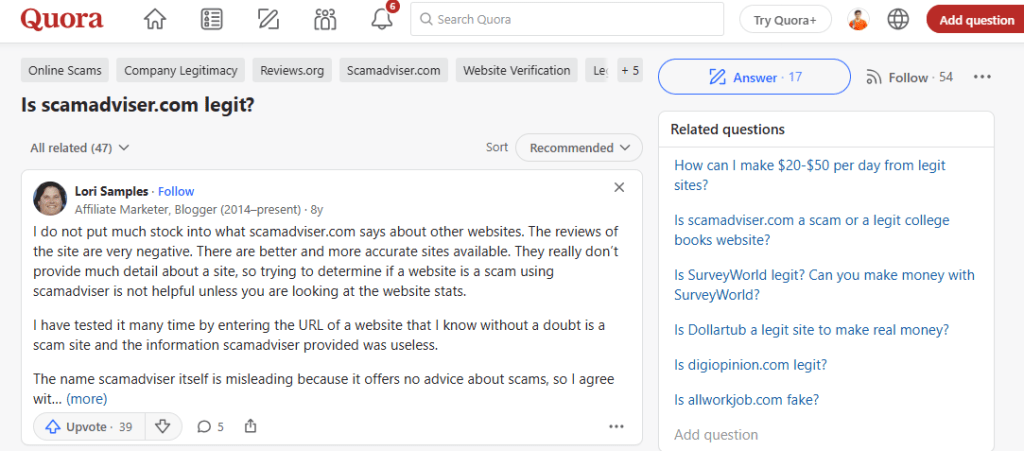
Common Complaints:
- False scam labeling of legitimate websites
- Poor customer support response
- Paid “manual verification” services
Some users claim that websites were wrongly flagged as suspicious, and resolving the issue required payment.
2. Paid Verification Raises Concerns
One of the biggest criticisms is the manual verification service, where businesses reportedly need to pay to improve or correct their ratings.
Why This Raises Red Flags:
- Creates a conflict of interest
- Businesses feel pressured to pay
- Trust score credibility may be questioned.
Note: ScamAdviser uses automated algorithms, and like any AI-based system, it is not 100% accurate. Users should avoid relying solely on one platform for critical decisions.
Are ScamAdviser Ratings Always Accurate?
Potential Algorithm Limitations
ScamAdviser relies heavily on automated data analysis. While efficient, this can lead to:
Issues:
- False positives (legitimate sites flagged as scams)
- Misinterpretation of domain or hosting data
- Lack of human verification in initial scoring
Impact on Legitimate Businesses
Many small businesses have reported negative impacts due to low trust scores.
Problems Faced:
- Loss of customer trust
- Reduced website traffic
- Damage to brand reputation
There are also discussions on platforms like Quora and Reddit suggesting that some genuine websites were incorrectly labeled as scams.
ScamAdviser: Legit Tool or Misleading Platform?
The Balanced Truth
It would be inaccurate to say that ScamAdviser is entirely a scam. The platform has helped many users identify suspicious websites and avoid fraud.
However:
- It is not fully reliable on its own
- It has received consistent criticism from users.
- Its paid services raise transparency concerns.
What Should You Do If You’ve Been Misled?
- A suspicious broker
- A misleading scheme
- A withdrawal issue
It’s important to take action.
You can report such cases to Legal Certifi for free consultation.
Why Report?
- Helps protect other users
- Initiates proper review processes
- Creates awareness about potential scams
Note: Always cross-check website safety using multiple tools and real user reviews before making financial or personal decisions online.
How to Safely Check Website Legitimacy?
Instead of relying only on ScamAdviser, follow these best practices:
Use Multiple Tools
- Google Safe Browsing
- WHOIS lookup
- Independent reviews
Check Real User Feedback
- Forums like Reddit
- Review platforms like Trustpilot
Verify Website Details
- Contact information
- Company registration
- Refund and privacy policies
Conclusion: Should You Trust ScamAdviser?
The claim “ScamAdviser is a scam” is not entirely accurate—but it’s also not baseless. The platform is useful as a first-level screening tool, but it should not be your only source of truth.
Key Takeaway:
Use ScamAdviser as a reference, not a final decision-maker.
If you’ve faced issues or suspect fraud, don’t ignore it—report it and help create a safer digital environment. For fraud complaints, broker disputes, and recovery assistance, turn to platforms built for that specific purpose — like LegalCertifi.
Also read the Access Tradex Review for a similar broker analysis.
To receive current updates, you can follow us, receive expert opinions and warnings about scams, please join us on:


Leave a Reply